
NV Lic. #0094488
Contact us for a free quote!Reno and the surrounding Northern Nevada region experience winter conditions that push boiler systems harder than almost any other time of year. Long stretches of below-freezing nights, dry air, sudden cold fronts, and wide temperature swings create an environment where weak boiler components fail quickly. Homeowners often assume their system is fine after a mild fall, only to face a no-heat emergency once winter reaches its peak. Understanding how our climate affects boilers and how professional service prevents the most common failures can help you avoid costly repairs when temperatures drop.
Overnight temperatures frequently fall into the teens and occasional single digits while daytime temperatures may rise sharply. This constant shift forces boilers to run longer cycles to keep indoor temperatures stable. During these extended run periods, boilers operate at higher internal temperatures, pressure fluctuates more frequently, and circulation pumps work continuously to move hot water through the system.
Rapid temperature changes amplify this stress. Our area’s 30-degree day-to-night swings can cause boilers to cycle far more often than normal. Each cycle creates expansion and contraction inside the heat exchanger, pipes, and fittings. Over time, these movements weaken aging components. A boiler that had no issues in October may begin short-cycling, losing pressure, or shutting off unexpectedly once winter sets in.
Continuous operation also exposes problems that stay hidden during warmer months. Minor corrosion inside a heat exchanger can turn into a leak under higher temperatures. A weak ignition system may misfire after hundreds of starts in a single cold spell. Air that entered the system in the fall becomes more disruptive as water expands and contracts with weather changes. Winter has a way of revealing every weakness at once, and usually at the most inconvenient time.
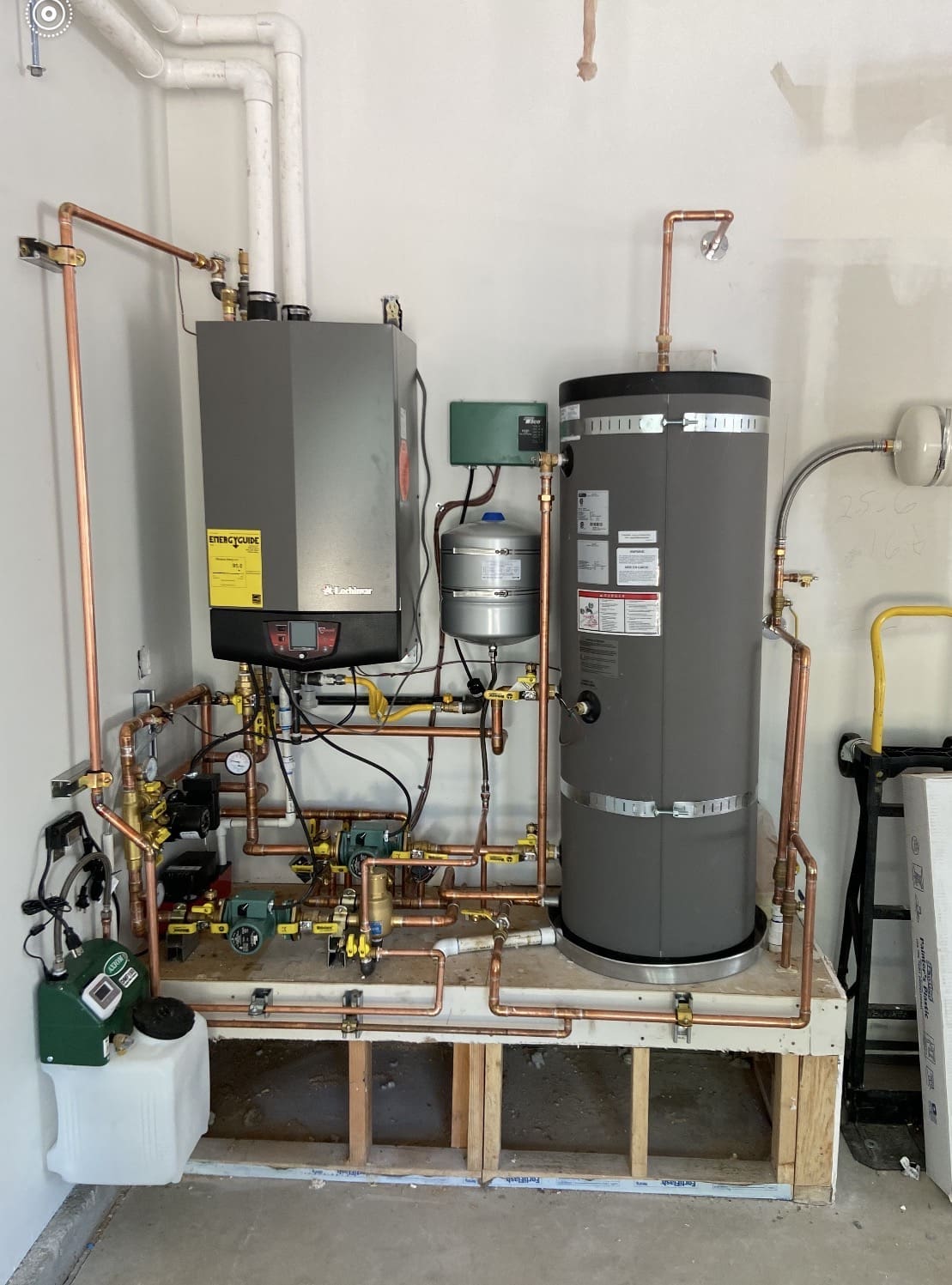
Most boiler breakdowns start small. When caught early, they are easy to correct. When ignored, they turn into no-heat emergencies. Reno homeowners can benefit from recognizing these early warning signs.
Low system pressure often appears first. A pressure gauge reading that slowly drops over several days usually indicates a small leak, increased evaporation from long run times, or air entering the system. Once pressure falls below the boiler’s minimum safety threshold, the system shuts down automatically.
Uneven heating is another common symptom. If certain rooms stay cool while others heat normally, air pockets may be blocking circulation. Air reduces flow in pipes, forces the boiler to fire more often, and increases fuel use. Left untreated, circulation imbalance can overheat the boiler and stress pumps and valves.
Unusual sounds such as kettling, whistling, or gurgling often signal restricted water flow or scale buildup inside the heat exchanger. These conditions worsen under sustained winter workload and eventually lead to overheating or system shutdown.
Ignition issues become more noticeable in cold weather. Igniters, sensors, and flame detection components that worked fine during fall may start hesitating or failing after constant daily cycling. Gas pressure fluctuations during peak demand periods also contribute to misfires.
None of these symptoms should be ignored. While they may begin as minor inefficiencies, they often escalate into sudden no-heat situations overnight.
While boiler repairs should always be handled by trained professionals, homeowners can monitor several things that help catch issues early.
Watch for noticeable temperature differences between rooms. Consistent cold spots usually indicate circulation problems. Listen for new noises around the boiler or pipes. Check around the base of the boiler for signs of moisture, rust, or staining. Glance at the pressure gauge occasionally to ensure levels remain steady. Observe how long the boiler runs during cold nights and whether cycling patterns change rapidly after a drop in outdoor temperature.
These small observations provide valuable information to a technician and often reduce diagnostic time. What homeowners should not do is attempt internal repairs, adjust gas components, open sealed boiler cabinets, or bleed system air unless the manufacturer explicitly instructs how to do so. Northern Nevada’s winter temperatures make incorrect DIY adjustments especially risky.
Winter boiler service in our region requires a detailed approach because systems must withstand prolonged and demanding conditions. A qualified technician examines far more than whether the boiler turns on.
A full inspection begins with verifying stable system pressure under actual operating load. Technicians check for hidden leaks, weak fittings, and early corrosion on connections exposed to constant expansion and contraction. Heat exchangers are inspected for scale buildup and wear that reduce efficiency and increase operating temperature. Ignition components are tested repeatedly to ensure reliable firing during heavy cycling.
Circulation is a major focus during winter. The technician ensures pumps move water through all zones effectively and checks that each zone valve responds correctly to thermostat calls. Uneven circulation is a leading cause of cold rooms and wasted energy during Northern Nevada winters.
Safety controls and sensors undergo individual testing because failures often occur only when systems are strained. This includes verifying that limit switches, pressure sensors, and shutoff devices operate within safe ranges.
Efficiency checks are especially important in winter. A boiler that has lost even ten percent efficiency can significantly increase fuel consumption during our longest cold spells. Technicians inspect combustion quality, confirm proper venting, and identify conditions that cause the boiler to work harder than necessary.
Quality winter service results in fewer breakdowns, improved efficiency, stable heat throughout the home, and lower fuel costs during the months when heating demand is highest.
In Reno and Tahoe, a boiler that appears to operate normally in early winter may be one cold snap away from failure. Once temperatures fall, systems that were already struggling cannot keep up. Emergency calls spike across the region during these cold fronts, leaving many homeowners waiting longer than they’d like for urgent repair.
Preventative service protects you from this scenario. Problems identified early in the season can be corrected quickly and safely. Technicians can replace worn components before they fail under peak load, balance circulation throughout the home, correct ignition issues, and restore system pressure before the coldest nights arrive.
Early Fall is the ideal time for a boiler service. A single visit provides peace of mind and ensures your home stays warm no matter how extreme the weather becomes.
Elements Heating & Plumbing serves Reno, Incline Village, and surrounding Northern Nevada communities with the training and expertise needed to keep boilers operating reliably throughout winter. Contact us today to schedule professional boiler service and prepare your heating system for the cold ahead.
